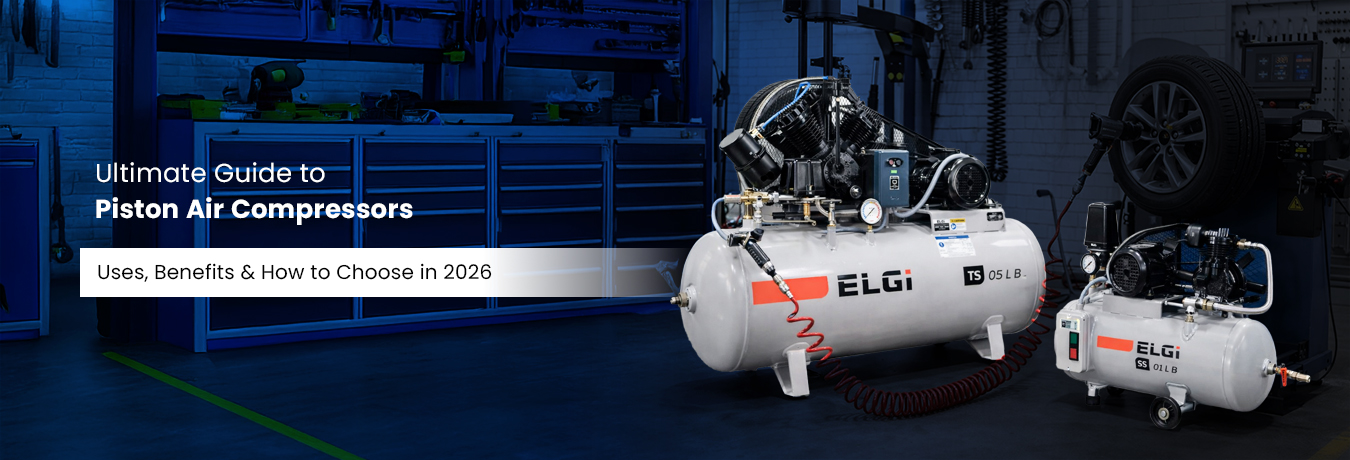
Ultimate Guide to Piston Air Compressors: Uses, Benefits & How to Choose in 2026
Air compressors remain the backbone of industrial, automotive, and workshop operations. Piston air compressors, also known as reciprocating air compressors, continue to be one of the most reliable and widely used compressed air solutions. From small workshops to heavy industrial facilities, piston compressors are valued for their durability, versatility, and cost-effectiveness. This guide explores how they work, key applications, major advantages, and how to choose the right model for your needs.
What Are Piston Air Compressors?
Piston air compressors operate using a piston driven by a crankshaft to compress air inside a cylinder. As the piston moves downward, air is drawn into the cylinder. On the upward stroke, the air is compressed and stored in a receiver tank. Because of their simple mechanical design, reciprocating air compressors are easy to maintain and suitable for a wide range of pressure requirements, making them ideal for both light-duty and industrial use.
Common Uses of Piston Air Compressors
Piston compressors are used across multiple industries due to their adaptability and power output.
Automotive & Workshops
- Operating pneumatic tools
- Tyre inflation and wheel balancing
- Spray painting and cleaning
- Brake and clutch servicing
Industrial Applications
- Manufacturing processes
- Metal fabrication and welding
- Material handling systems
- Packaging and assembly lines
Construction & Utilities
- Powering jackhammers and drills
- Site cleaning and maintenance
- Portable air supply for field work
Industrial reciprocating air compressors are especially popular in environments where compressed air demand is intermittent but high in pressure.
Key Piston Air Compressors Benefits
Understanding piston air compressors benefits helps businesses choose the right solution for long-term performance.
1. Cost-Effective Investment
Piston compressors typically have a lower initial cost compared to rotary screw compressors, making them ideal for small and medium operations.
2. High Pressure Capability
They can deliver high pressure efficiently, making them suitable for demanding industrial and workshop applications.
3. Durable & Robust Design
Their rugged construction ensures long service life, even in harsh operating conditions.
4. Easy Maintenance
With fewer complex components, piston compressors are easier to service and repair, reducing downtime.
5. Flexible Operation
Ideal for applications with intermittent air usage, as they perform efficiently without continuous operation.
Single-Stage vs Two-Stage Piston Air Compressor
Choosing between a single-stage piston air compressor and a two-stage piston air compressor depends on pressure requirements and usage intensity.
For high-volume operations, two-stage models offer better performance and longevity.
Oil-Free vs Oil-Lubricated Piston Compressors
A key decision when selecting a piston compressor is choosing between oil-free vs oil-lubricated piston compressors.
The right choice depends on air quality requirements and operating conditions.
Industrial Reciprocating Air Compressors in 2026
In 2026, industrial reciprocating air compressors are designed with improved energy efficiency, better cooling systems, and enhanced safety features. Many modern units also include:
- Thermal overload protection
- Low-noise operation designs
- Energy-efficient motors
- Smart pressure controls
These advancements help industries reduce energy consumption while maintaining consistent compressed air output.
How to Choose the Right Piston Air Compressor
When selecting a piston air compressor, consider the following factors:
1. Air Demand (CFM & PSI)
Match compressor output to the tools or machines you operate.
2. Usage Pattern
Intermittent usage suits piston compressors best, while continuous use may require heavy-duty two-stage models.
3. Application Type
Choose oil-free or oil-lubricated based on air purity needs.
4. Space & Portability
Vertical or portable designs are ideal for compact workshops
5. Service & Support
Opt for suppliers offering warranty, spares, and local service support.
Why Piston Air Compressors Remain Relevant in 2026
Despite advances in compressor technology, piston air compressors remain relevant due to their affordability, reliability, and adaptability. They are particularly suitable for businesses that require high pressure, moderate airflow, and dependable performance without high capital investment. For workshops, service centers, and small to mid-sized industries, reciprocating compressors continue to deliver unmatched value.
Final Thoughts
Choosing the right piston air compressors or reciprocating air compressors is essential for efficient operations in 2026. By understanding usage requirements, pressure needs, and the differences between single-stage, two-stage, oil-free, and oil-lubricated models, businesses can make informed decisions that support long-term productivity. Whether you’re upgrading an existing system or setting up a new operation, investing in the right piston air compressor ensures reliability, performance, and cost efficiency for years to come.
Share This Story, Choose Your Platform!


